
TRACKING, CONVEYORS & SORTATION
Materials handling & warehousing
Control systems that connect product movement with tracking and warehouse information.
Discuss your project ↗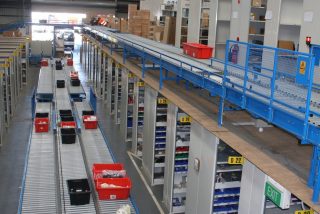
Connect movement with information
RS Automation’s published materials handling work includes warehouse tracking systems, conveyor controls, barcode scanning and database interfaces. These applications link what is moving through the plant with the information needed to route and track it.
Examples of the application scope
The original website lists work involving distribution centres, automotive parts, bulk packing and magazine sorting. Those applications have different handling requirements, but share a need for coordinated sequences and reliable information exchange.
- Conveyor sequence control
- Barcode scanning and product tracking
- Multilane sortation
- Warehouse and inventory information interfaces
- Database-connected handling processes
- Operator visibility and exception handling
Historical project references
The existing portfolio names Chanel Eastern Creek, Harris Scarfe, Holden parts distribution, DD Mailing and KitchenAid distribution. It describes conveyor controls, barcode scanning and database interfaces across these applications.
Define what must be tracked
Start with the item, how it is identified and where it must go. Tell us about the scanners, conveyor equipment and existing database or warehouse system. The handling sequence and the information requirements should be discussed together.
Map the transfer sequence
Trace material or products between conveyors, machines and storage locations. Identify sensing points, accumulation areas and the interfaces controlling each transfer. The published portfolio includes warehousing, inventory tracking, barcode scanning and multilane sortation experience; the specific scope for a new installation needs to be established.
- Product detection and identification points
- Transfer permissives and downstream readiness
- Accumulation and waiting behaviour
- Interfaces with sortation or tracking systems
Make exceptions visible
Define how the system identifies an unavailable transfer, missing product detection or a communications fault. The operator should be able to locate the affected area and understand the next required action. Include controlled recovery and the effect on tracking information.
- Equipment and product-status indication
- Transfer timeout and exception messages
- Recovery procedure and operator input
- Counts or tracking records affected by interruptions
FROM THE SAVED WEBSITE
Warehousing & sortation references.
Explore the historical applications described in the backup, with practical questions for planning similar work.
Chanel Eastern Creek ↗
Warehouse tracking and conveyor controls
Harris Scarfe sortation ↗
Bulk packing and multilane sortation
Holden parts warehouse tracking ↗
Conveyor, scanning and database interfaces
DD Mailing sorting & tracking ↗
Barcode scanning for magazines and books
Kitchen Aid distribution centre ↗
Warehouse tracking and control interfaces
TALK TO RS AUTOMATION
Tell us what your plant needs.
Discuss the equipment, your objective and the next practical step.